Human Motivation & Affective Neuroscience Lab
  home our research publications research team teaching & resources contact us

From the left: Heidi Reichmann, Eline Leen,Nicole Krause (hidden), Judith Fischer, Andreas Rösch, Martin Köllner,
Oliver Schultheiss, Mariya Patalakh, Jeanette Henning,
Miriam Frisch

From the left: Heidi Reichmann, Eline Leen, Maite Knopp,
Nicole Krause (hidden), Judith Fischer, Andreas Rösch, Martin Köllner, Mariya Patalakh, Jeanette Henning , Miriam Frisch

HuMAN Lab Team Summer 2009, at the Bergkirchweih in Erlangen


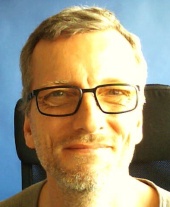
Oliver C. Schultheiss
Professor,, 2007, Friedrich-Alexander University, Erlangen, Germany
Dr. phil., 1996, Friedrich-Alexander University, Erlangen, Germany
Dipl.-Psych., 1994, Friedrich-Alexander University, Erlangen, Germany
Curriculum vitae

I became interested in implicit motives as an undergraduate student, and the interest soon turned into a passion to which I have dedicated all my research ever since. My main areas of research are the endocrine underpinnings of implicit motives, the relationship between implicit and explicit levels of motivation, the role of implicit motives in the processing of facial expressions of emotion, and how implicit motives influence Pavlovian and instrumental learning. Recently, I have also started to examine the ability to quickly name nonverbal stimuli as a fundamental cognitive trait and how this trait interacts with brain asymmetries in perception and motor control in a variety of phenomena related to motivation and personality.

Miriam Frisch

Curriculum vitae

Psychological studies in general and motivational studies in particular appeal to me. Therefore I intended for my diploma a topic related to this field. I will try to clarify the mysteries of intrinsic hunger drive through projective methods, specifically constructed for handling my concerns. Why do individuals actually eat – except of course for selfpreservation – and to what extent do they differ? Hence a measuring instrument with perceptual material should be generated to distinguish highly motivated from lowly motivated eaters as well as average from overweight samples. Thanks to this eclectic position I will be able to study both, human motives and health demands.

Bettina Glaiber

Curriculum vitae

I am interested in developing a measure of implicit hunger motivation. One of the most common motives must be the hunger motive. There are several different factors as to why we eat or why we do not eat. The first step in my research is to find out with the help of PSE pictures which categories you can find for single hunger motives. The goal is, after building categories for single hunger motives, to see a difference or a connection between the individual motives of people. I also have research interests in the relationship of hunger motivation and physiological factors.

Stacie Graham

Curriculum vitae

After my studies of economics, it was important to me to gain professional experience before becoming a doctoral candidate. It was through my work as a consultant that I found my interest in implicit motives. This interest I now pursue with a great passion. I hope to reach more practitioners by exploring the links of implicit motives to management behavior. My goal is to illustrate the importance of implicit and explicit motive congruence by measuring job performance/effectiveness, as well as the advantages of a heightened awareness of an individuals own motives in order to better understand and thereby gain more self-control over actions in the workplace without having to forego emotional or personal well-being.

Martin Köllner

Curriculum vitae

I am interested in the relationship between implicit and explicit motives. For my diploma thesis, I am conducting a meta-analysis on the association between measures of implicit motives (PSE, TAT) and self-attributed motivational needs and goals (questionnaires, inventories) and the factors that may have a moderating effect on the association. In addition, I work as tutor for the Chair for Experimental Psychology, Motivation, and Affective Neuroscience and will complete a practicum at the HuMAN Lab.

Annette Kordik

Curriculum vitae

Since many behaviors are propelled by a desire to experience pleasure while avoiding pain, my research is dedicated to the exploration of the role of affect and its nonverbal expressions in implicit motives. I am currently using electromyographic measures of facial muscle activity as an indicator of affect associated with motive-relevant incentives. Furthermore, my work also examines the inhibition of nonverbal expressions of emotions.
In order to get the most valid view as possible I use a multi-methodical approach combining physiological meaures with techniques from personality and social psychology (e.g. the IAT).
In the future, I would like to add a comparative perspective to my work and include emotional expressions of other mammals.

Alexandra Mader

Curriculum vitae

My research is about the motivational, emotional, and behavioral effects of personal visions. Because visions are defined as idealized mental images of the future and implicit motives are particularly sensitive to image-like stimuli, I hypothesize that there should be a match between the motivational content of personal visions and the level of corresponding implicit motives. This match should influence goal setting, goal advancement, positive affect and other behavioral and emotional measures. (http://www.psy.wi.tum.de/Mitarbeiter/Alexandra_Mader). I work as a research assistant in the DFG-Project “The motivating power of visions”, at the Technische Universität München (http://www.psy.wi.tum.de/EN/Projekte.php?70).

Mariya Patalakh

Curriculum vitae

I am interested in exploring the mutual relationships beetween neural und psychological processes involved in motivation, cognition and emotion. I am also interested in psychoendocrinology and the role of hormones in the processing of facial expressions of emotion. I have already mastered a content coding system for the assessment of implicit motives. Currently, I assist in conducting a study that analyses the effects of referential competence and emotional intelligence on the congruence between implicit motives and people's self-atrributed motivational needs and goals.

Maika Rawolle

Curriculum vitae

My research revolves around the motivational power of visions, idealised mental images of the future. As a core component of charismatic and transformational leadership, visions are expected to promote motivation. However, the motivational processes and effects triggered by visions have not yet been empirically explored. In my current research I am testing the assumption that visions are effective by arousing implicit motives. I furthermore hypothesize that a vision’s motivational effects are greatest if there is a thematic match between vision content and a person's implicit motives. I am testing these hypotheses in a series of studies in which various experiential, behavioral, and physiological correlates and outcomes of aroused implicit motives are measured. I conduct my research, which is funded by the Deutsche Forschungsgemeinschaft [German Research Foundation], at the Technische Universität München (http://www.psy.wi.tum.de/EN/Projekte.php?70).

Ramona Roch

Curriculum vitae

I am interested in how motive-goal-discrepancies emerge and how to deal with them in order to improve well-being and reduce these discrepancies. I therefore developed a training based on a variety of strategies that help people reduce the gap between their motives and their personal goals. I expect the reduction to lead to enhanced wellbeing compared with people. For the future I`d like to further develop and use this approach to reduce motivational discrepancies in a work environment (e.g. as a personnel development instrument).

Andreas Rösch

Curriculum vitae

I am interested in how people are influenced by their implicit motives in their social interactions. As a first step, I try to find out if there are any quantifiable differences in emotion displays associated with implicit motives. Therefore I am currently creating a photo and video stimulus pool of facial expressions of emotion. I am also collecting endocrine, implicit motive and other personality data from the individuals displaying the emotions. Then I want to explore if these emotional stimuli influence other people’s physiological, cognitive and behavioral reactions depending on both, the sender’s and the perceiver’s implicit motives.

Anja Schiepe

Curriculum vitae

My research is based on the assumption that the arousal of an implicit motive contributes to the experience of flow and focuses on the role of the implicit power motive in flow. I hypothesize that a person with a high implicit power motive experiences more flow while working on a power-related task than a person with a low implicit power motive. I am testing this hypothesis in studies using competition, group-discussion, and classroom-management tasks to arouse implicit power motivation in laboratory and field settings. Dependent measures include motive changes, salivary hormones, behavioral observation, and learning gains. My research is also dedicated to the development of a non-declarative measure of flow.
http://www.psy.wi.tum.de/Mitarbeiter/Anja_Schiepe

   
At the University of Michigan
O. Schultheiss photo
Julie Hall
MA, 2004, Indiana University, Bloomington, Indiana
BA, 1999, University of Virginia, Charlottesville, Virginia
Curriculum vitae

Broadly speaking, I am interested in the psychological and neural processes involved in emotion, cognition, and motivation.  My research employs psychophysiology and fMRI methods to investigate the neural and biological mechanisms underlying emotional and motivational processing.  Secondly, I’m interested in how individual differences in mood and motivation influence affective responses (behavioral, physiological, neural) and cognitive functioning (decision making, risk taking, attention, memory).  Thirdly, I am interested in how these processes are disrupted in individuals with clinical disorders involving affective dysregulation and addiction.  I also have broad research interests in emotion regulation, neuroeconomics, and affective neuroscience.

E. Meier photo
Elizabeth A. Meier
MSW, 2003, University of Michigan, Ann Arbor, Michigan
BA, 1999, Fort Lewis College, Durango, Colorado
Curriculum vitae

I am interested in exploring how the efficacy of various pedagogical approaches differs depending on the interaction between students’ implicit motivational dispositions and the affective signals they find rewarding in a classroom environment. One of the studies our lab is conducting explores how implicit motives and exposure to smiling versus neutral faces interact to influence levels of accuracy and improvement during a pattern recognition task. I plan to use a variety of qualitative and quantitative data from another experimental study to assess whether the educational outcomes of ethnically diverse undergraduates at 10 institutions are predicted by the interaction between their implicit motive dispositions and the type and intensity of affective communication processes that occurred in the learning environment to which they were assigned.

HuMAN Lab Alumni:

Michael Anuzis
Albert Bertram
Benjamin Dirlikov
Anja Fiedler
Nicolette Jones
Scott Liening
Jeff MacInnes
Tiffiany Murray
Joyce S. Pang
Kathrin Riebel
Ekjyot Saini
Daniel Schad
Ishita Sheth
Steven J. Stanton
Jamie Wazenkewitz
Katy Welsh
Michelle M. Wirth
Diana Yankova

Collaborators:

Joachim C. Brunstein, University of Giessen
Stephanie Brown, University of Michigan
Kenneth L. Campbell, University of Massachusetts, Boston
Andy Elliot, University of Rochester
Barbara L. Fredrickson, University of North Carolina at Chapel Hill
Todd M. Thrash, The College of William & Mary
Brenda Volling, University of Michigan

Other links: Christoph Schultheiss (physicist), Research Center Karlsruhe, Karlsruhe, Germany
home  |   our research  |   publications  |   research team  |   teaching & resources  |   contact us

nsf-logo    dfg-logo